Every fitness feed has the same character: up at 5:30, workout done before sunrise, smug about it. The rest of us snooze twice and promise to go after work.
So is working out in the morning really better, or does it just look better on Instagram? The research gives a more interesting answer than either camp admits. Morning exercise has some real advantages, evening exercise has a few of its own, and the biggest factor isn't the clock at all. This guide walks through what the studies actually found, then shows you how to start working out in the morning if that's the slot that fits your life.
Is working out in the morning better? Not for everyone, but it has real perks. In a 12-week trial (Arciero 2022), women who trained in the morning lost more abdominal fat and saw bigger blood pressure drops, while evening training built more strength. In a study of people who kept lost weight off, early morning was the most common slot among those who exercised at a consistent time, and consistency is what drives results. Evening workouts don't ruin sleep unless they're hard and end within about an hour of bedtime. Best time: the one you'll actually keep.
Is working out in the morning better than at night?
Short version: it depends on what you want, and the differences are smaller than the internet makes them sound.
The cleanest head-to-head study comes from Arciero and colleagues in Frontiers in Physiology (2022). They randomly assigned 30 trained women and 26 trained men, mostly in their 40s, to the same 12-week program done either between 6 and 8am or between 6:30 and 8:30pm. Same exercise, same diet guidance, different clock.
| Group | Morning training did better on | Evening training did better on |
|---|---|---|
| Women | Abdominal fat and total fat loss, blood pressure | Upper-body strength, push-up gains, power |
| Men | No clear advantage | Systolic blood pressure, fat burning, less fatigue |
In the women, for example, the morning group lost about 2.6 kg of abdominal fat on average versus about 0.9 kg in the evening group, while the evening group added more push-up reps (13 vs 9). It's one study with small groups of people who already exercised, so treat it as a hint, not a rule. But it lines up with the bigger picture: both times work, and each has a slight edge for different goals.
What about long-term health? Large tracker studies disagree with each other. In UK Biobank data on about 30,000 adults with obesity, Sabag and colleagues (Diabetes Care, 2024) found that people whose moderate-to-vigorous activity happened mostly in the evening had the lowest risk of dying over about eight years, though morning and afternoon exercisers also did much better than people who barely moved. Another UK Biobank analysis, by Ma and colleagues (Chronobiology International, 2023), found the lowest cardiovascular risk with activity peaking around midday. These are observational studies, so they can't prove the timing caused anything. The safe takeaway: any time beats no time by a mile, and the gap between time slots is small next to that.
Benefits of working out in the morning
If the clock barely matters for your body, why do so many people swear by mornings? Because the biggest benefits are about behavior.
1. It's easier to be consistent
This is the big one. Schumacher and colleagues (Obesity, 2019) surveyed 375 people in the National Weight Control Registry, a group who'd lost weight and kept it off. Most of them (68%) exercised at a consistent time of day, and those consistent exercisers did more exercise and were more likely to hit the 150-minutes-a-week guideline. Of the consistent group, almost half (47.8%) were early-morning exercisers, the most common slot.
The study also found the specific time didn't matter once people were consistent. But mornings make consistency easier for a simple reason: nothing has happened yet. No late meeting, no friend asking you to dinner, no "I'm too tired after today". By 7pm your day has had twelve hours to get in the way. At 7am it's had none.
2. It may help you wake up
Right after waking, your brain runs slow for a while. Sleep scientists call it sleep inertia. A burst of exercise can make that feel lighter. In a 2021 study in Physiology & Behavior, Kovac and colleagues woke 15 adults from a nap and had them do 30 seconds of hard cycling, 30 seconds of easy cycling or nothing. They felt least sleepy after the hard sprint. Their scores on thinking tests didn't improve, so it's a feeling-awake effect, not a brain boost. But feeling awake is exactly what stops you from crawling back into bed.
3. It's done before your excuses wake up
A morning workout is one decision instead of a dozen. You don't spend the day deciding whether you'll still go tonight. It's done, and every choice after that is easier because you're already the person who exercised today.
4. It can help with fat loss for some people
The Arciero trial above found more abdominal fat loss with morning training in women, and there's a weight-loss study we'll cover below. Promising, but not magic.
Where evening workouts win
To be fair to the night crowd, here's what the research gives them.
Strength and power peak later in the day
Your body temperature and muscle performance are lower right after waking. A review in the Journal of Strength and Conditioning Research by Chtourou and Souissi (2012) found that short, explosive performance tends to bottom out in the early morning and peak in the late afternoon. If you're chasing a heavy lift or a sprint record, later is usually stronger.
There's a catch that helps morning people, though. The same review found that your body adapts to the time you train: train regularly in the morning and your morning performance rises toward your afternoon level. You get better at the time you practice.
Does evening exercise ruin your sleep?
Usually not, which surprises people. A meta-analysis of 23 studies by Stutz, Eiholzer and Spengler (Sports Medicine, 2019) found that evening exercise didn't hurt sleep in healthy adults, and slightly increased deep sleep. The exception: vigorous exercise that ended an hour or less before bed could make it harder to fall asleep. So a hard 10pm HIIT session might cost you, but a 7pm run probably won't.
That flips one of the common "morning is better" arguments. Morning workouts don't win because evening ones wreck sleep. They win because they're easier to protect.
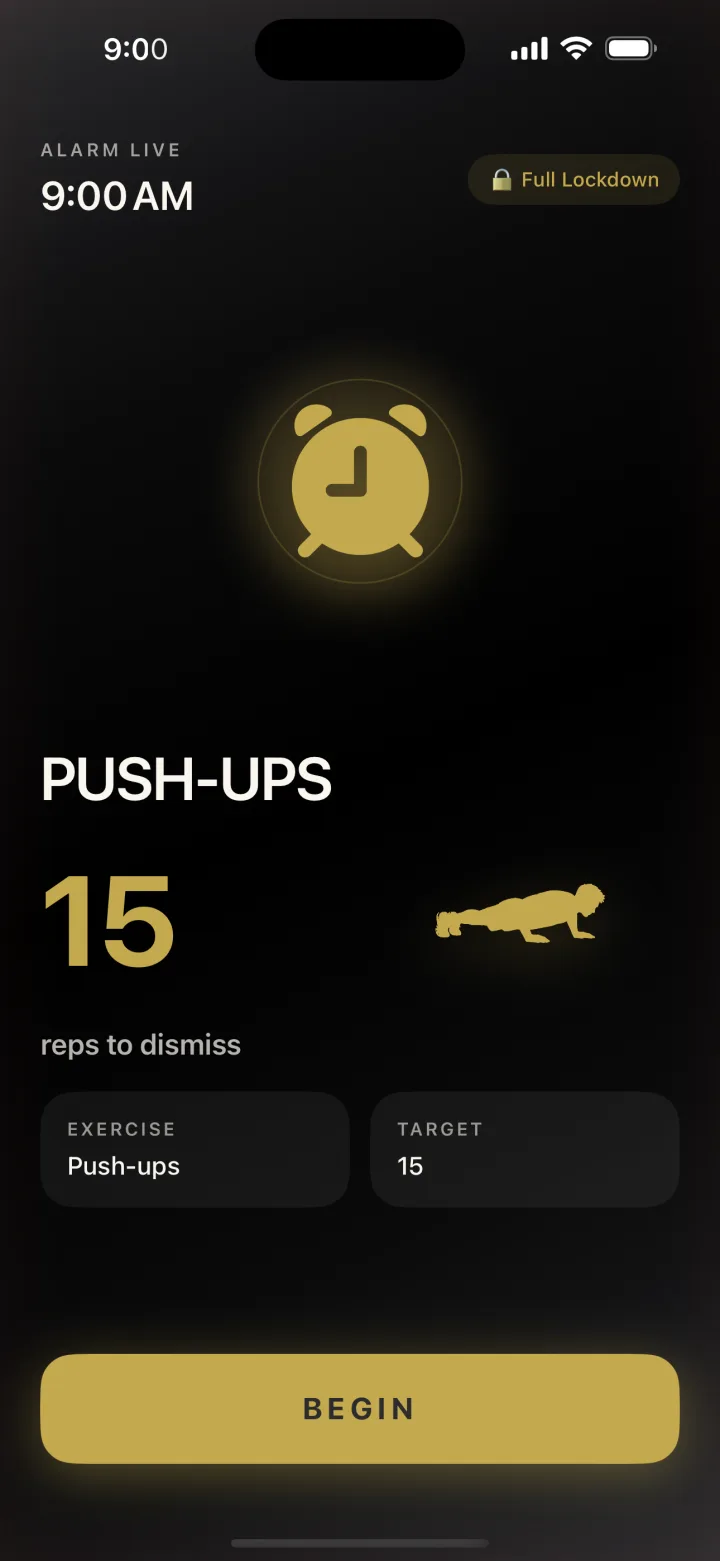
RiseReps only goes quiet when your iPhone's camera counts your push-ups, squats or jumping jacks. No snooze, no tap-to-dismiss, and Persistent mode re-fires every 60 seconds if you bail. Counting happens on your device, nothing uploaded.
Does working out in the morning help you lose weight?
Maybe a little more, according to one well-run study. In the Midwest Exercise Trial 2, Willis and colleagues (International Journal of Obesity, 2020) followed inactive young adults with overweight or obesity through 10 months of supervised exercise, five days a week. People who did most of their sessions between 7am and noon lost 7.2% of their body weight on average. People who mostly exercised between 3 and 7pm lost noticeably less, and the early group's loss was significantly greater. Oddly, the researchers couldn't find why: the groups ate about the same and burned about the same energy overall.
Two honest caveats. People weren't randomly assigned to a time slot; they picked their own, so morning exercisers may differ in other ways. And everyone who exercised consistently, at any time, did far better than the non-exercise group. So yes, morning might give weight loss a nudge. Food and consistency still do most of the work.
Why is working out in the morning better for weight loss (for some people)?
Nobody knows for sure yet. The likeliest explanation is the boring one: morning exercisers miss fewer sessions. In a 10-month program, a few skipped evenings a month add up.
Does working out in the morning make you tired all day?
It shouldn't, once your body adjusts. If it does, look at these first:
- You cut your sleep to fit it in. The most common cause by far. Waking an hour earlier without going to bed earlier just moves the tiredness to 3pm. Our guide on how to wake up at 5am has a bedtime table if you're shifting your schedule.
- You went too hard, too soon. A brutal session at 6am when you're used to nothing will flatten you. Start short and easy.
- You skipped fuel or water. Some people feel fine training on an empty stomach; others feel drained. More on that next.
- It's the first week. New routines feel rough. Give it two weeks before you judge.
If you're tired all the time no matter how you sleep, or exercise leaves you unusually exhausted, that's worth raising with a doctor.
Working out in the morning before eating
Can you work out in the morning without eating?
For a short or easy workout, most healthy people can, and plenty prefer it. There's no rule that says you must eat first. For a long or hard session, many people perform better with a small snack, like a banana or a piece of toast. Try both and see how you feel.
Signs you need to eat first: dizziness, shakiness, nausea or feeling weak halfway through. If you have diabetes or take medication that affects your blood sugar, talk to your doctor before exercising on an empty stomach.
What to eat before working out in the morning
Keep it small and easy to digest. Something with carbs and a bit of protein, 30 to 60 minutes before, works for most people. Water matters more than most people think after a night without drinking anything.
How to start working out in the morning
Knowing mornings work is the easy part. Actually getting up is the hard part. Here's what helps, in order of how much it matters.
1. Move your bedtime first
Don't steal the time from your sleep. Go to bed 15 to 30 minutes earlier every few days until you're getting enough sleep before your new alarm. If you're a natural night owl, our guide on how to be a morning person covers how to shift your body clock without misery.
2. Start embarrassingly small
Five to ten minutes. Not an hour at the gym. The goal for the first two weeks is the habit of moving right after you wake up, not fitness. You can add more once getting up stops being a fight.
3. Lay everything out the night before
Clothes next to the bed, shoes by the door, water on the nightstand. Every step you remove from the morning is one less chance for your sleepy brain to negotiate.
4. Pick a fixed time and keep it
The Schumacher study above found consistency in timing went with doing more exercise. Same time every day turns "should I work out?" into "it's 6:45, so I'm working out".
5. Make the alarm impossible to snooze
Here's how to make working out in the morning easier: remove the moment where you decide. Most morning workout plans die in the 10 seconds after the alarm, when the snooze button is right there. That's why we built RiseReps: when your alarm fires, your iPhone's camera counts your push-ups, squats or jumping jacks using on-device pose detection, and the alarm only stops when your reps are done. There's no snooze button and no tap-to-dismiss. Persistent mode re-fires the alarm every 60 seconds if you close the app, and optional Full Lockdown blocks your other apps until you finish.
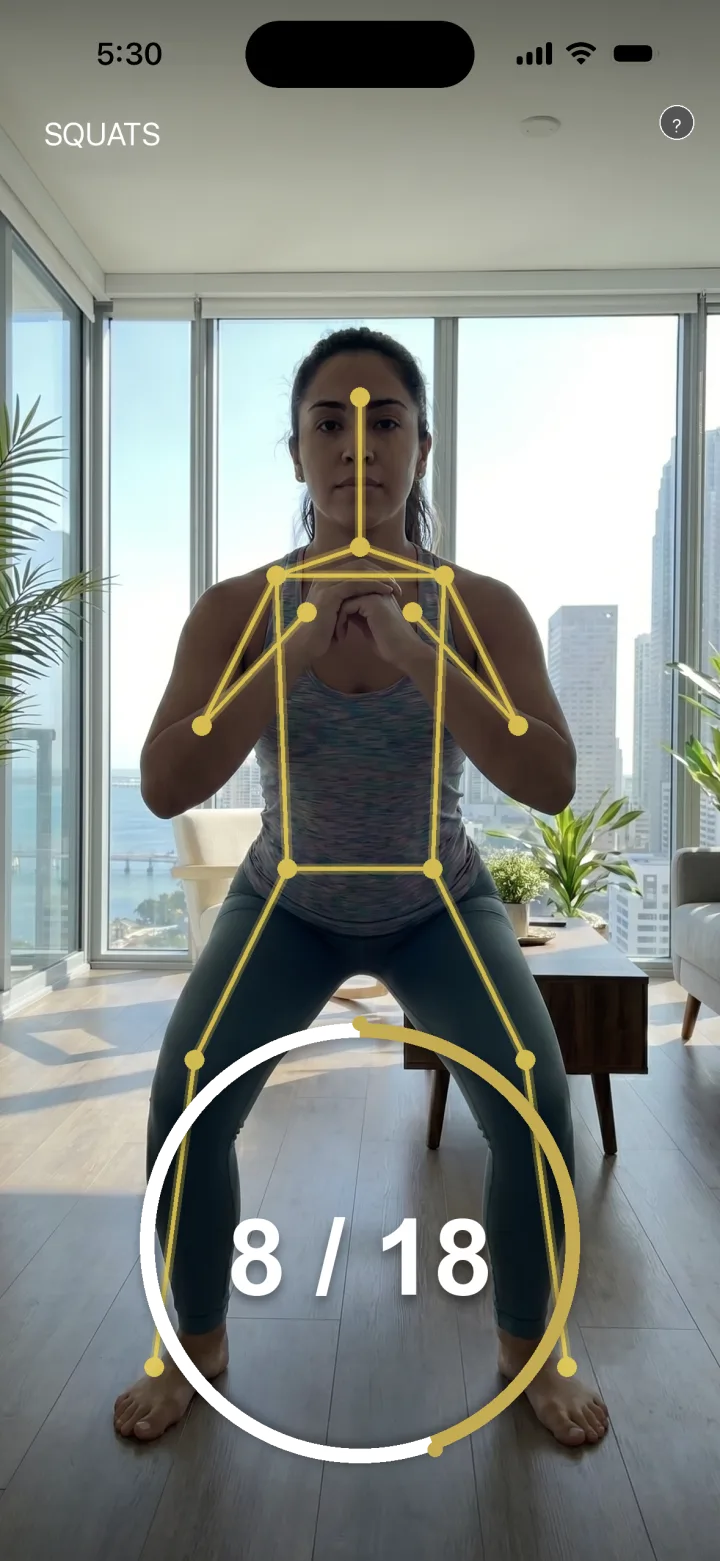
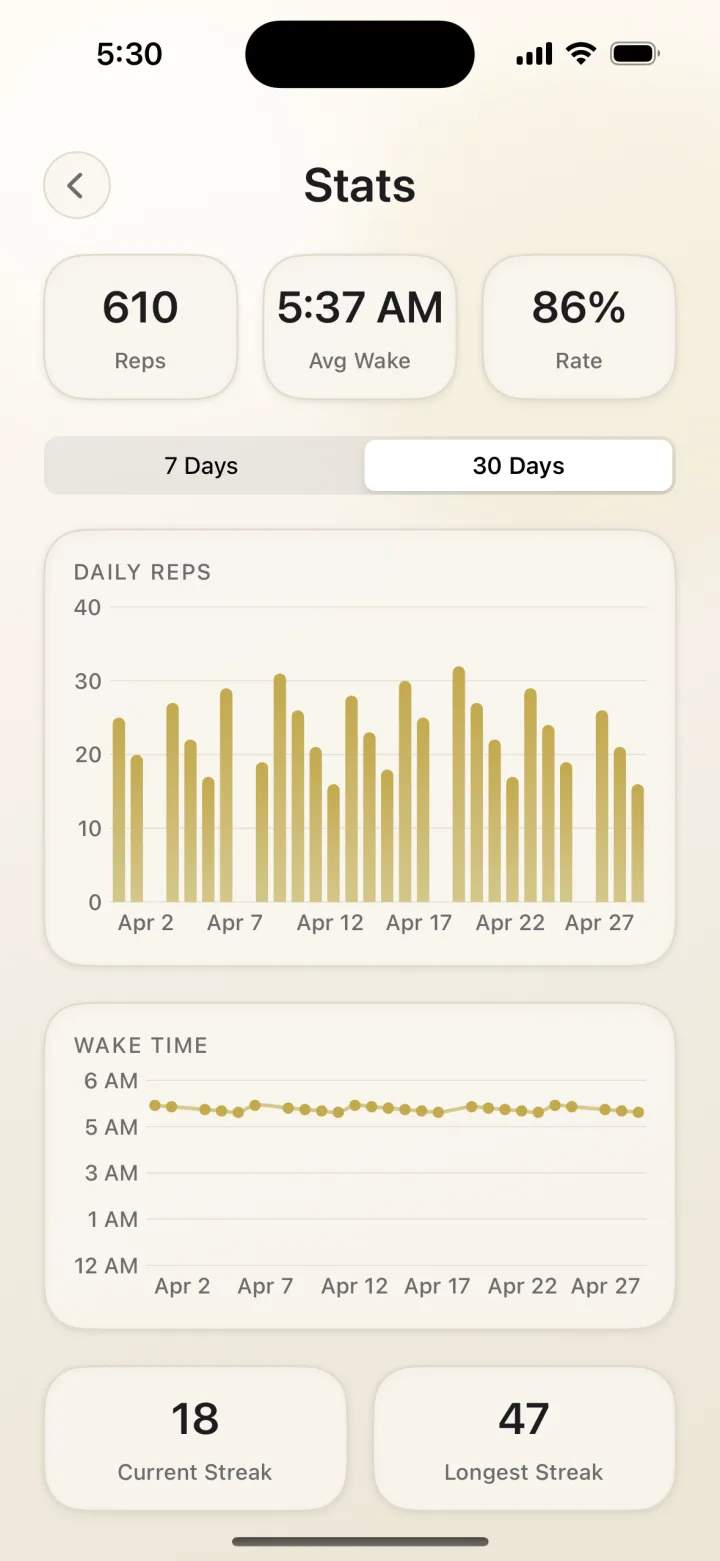
By the time the alarm goes quiet, the first part of your workout is already done and you're standing up. Built-in progression can raise your reps each week, and your streak and wake times log themselves. RiseReps is free to download on the App Store, and the alarm workouts need RiseReps Pro, a single annual subscription.
If you'd rather try other tricks first, our list of fixes for hitting snooze covers alarm placement, light and more.
A 10-minute morning workout to start with
No equipment, done next to your bed. Rest as long as you need between rounds, and scale the numbers to you.
| Minutes | What to do | Easier version |
|---|---|---|
| 0–2 | Jumping jacks, steady pace | Step jacks (no jump) |
| 2–4 | Bodyweight squats, 2 sets of 10–15 | Squat to a chair |
| 4–6 | Push-ups, 2 sets of what you can do with good form | Push-ups against a wall or counter |
| 6–9 | Repeat: 30 jumping jacks, 10 squats, a few push-ups | Just one more round of the easy versions |
| 9–10 | Walk around, stretch, drink water | Same |
That gets your heart rate up and works your legs, chest and shoulders. Over time it counts toward the CDC's adult guidelines: 150 minutes of moderate activity a week (or 75 of vigorous), plus muscle-strengthening on 2 or more days. The CDC notes you can break activity into smaller chunks, so ten minutes in the morning and a walk at lunch both count.
Want to go deeper on one exercise? See what the research says about jumping jacks benefits or doing push ups every day.
Who should check with a doctor first
If you have heart, lung or joint problems, are pregnant, are recovering from an injury or haven't exercised in a long time, check with a doctor before starting. Stop and get medical advice if you feel chest pain, dizziness or unusual shortness of breath.
FAQ
Is working out in the morning better than at night?
Not for everyone. A 12-week trial found morning training cut more abdominal fat and blood pressure in women, while evening training built more strength. Morning workouts are often easier to do consistently, which matters more than the time itself.
Does working out in the morning help you lose weight?
It may help a little. In a 10-month study, people who mostly exercised between 7am and noon lost more weight than those who exercised between 3 and 7pm. Consistent exercise at any time, plus diet, still matters most.
Can you work out in the morning without eating?
For short or easy workouts, most healthy people can. For longer or harder sessions, a small snack often helps. Eat first if you feel dizzy or weak, and talk to your doctor first if you have diabetes or take blood-sugar medication.
Why does working out in the morning make me tired?
Usually because you cut sleep to fit it in, went too hard too soon, or skipped water or food. Move your bedtime earlier, start with short sessions and give it two weeks. If you're tired all the time anyway, see a doctor.
Does working out in the morning help you sleep better?
Exercise at any time tends to help sleep. Evening exercise doesn't usually hurt sleep either, unless it's vigorous and ends within about an hour of bedtime. If late workouts keep you up, mornings are a good fix.
How do I start working out in the morning?
Move your bedtime earlier first, start with 5 to 10 minutes, lay out your clothes the night before and keep the same time daily. An alarm you can't snooze, like one that needs exercise reps to turn off, removes the hardest decision.
Sources
- Arciero P. J., Ives S. J., Mohr A. E., et al. (2022). Morning exercise reduces abdominal fat and blood pressure in women; evening exercise increases muscular performance in women and lowers blood pressure in men. Frontiers in Physiology, 13. Full text.
- Sabag A., Ahmadi M. N., Francois M. E., et al. (2024). Timing of moderate to vigorous physical activity, mortality, cardiovascular disease, and microvascular disease in adults with obesity. Diabetes Care, 47. Full text.
- Ma T., Jennings L., Sirard J. R., Xie Y. J., Lee C. D. (2023). Association of the time of day of peak physical activity with cardiovascular mortality: findings from the UK Biobank study. Chronobiology International, 40. Full text.
- Schumacher L. M., Thomas J. G., Raynor H. A., et al. (2019). Relationship of consistency in timing of exercise performance and exercise levels among successful weight loss maintainers. Obesity, 27. Abstract.
- Kovac K., Vincent G. E., Paterson J. L., et al. (2021). The impact of a short burst of exercise on sleep inertia. Physiology & Behavior, 242. Abstract.
- Chtourou H., Souissi N. (2012). The effect of training at a specific time of day: a review. Journal of Strength and Conditioning Research, 26. Abstract.
- Stutz J., Eiholzer R., Spengler C. M. (2019). Effects of evening exercise on sleep in healthy participants: a systematic review and meta-analysis. Sports Medicine, 49. Abstract.
- Willis E. A., Creasy S. A., Honas J. J., Melanson E. L., Donnelly J. E. (2020). The effects of exercise session timing on weight loss and components of energy balance: Midwest Exercise Trial 2. International Journal of Obesity, 44. Full text.
- Centers for Disease Control and Prevention. Adult Activity: An Overview. cdc.gov.