Doing 100 push ups a day is one of those goals that sounds clean and simple. One number. No gym. No equipment. It's a staple of month-long fitness challenges, and the search results are full of "I did it for 30 days" videos with dramatic before-and-after shots.
The real answer is less dramatic and more useful. A hundred push-ups a day can make you noticeably stronger. It can also stall after a few weeks, irritate your wrists and die the first morning you're tired. Here's what the research says, what a month really looks like, and how to build up to 100 if you can't do 20 yet.
Is 100 push ups a day good? For most healthy adults who can already do them with clean form, yes, as a strength and endurance habit. Expect better push-up numbers and some extra chest, shoulder and triceps strength in the first month. Split the 100 into sets you can finish without grinding, take an easy day if your joints complain, and once 100 feels easy, make the push-ups harder instead of doing more of them. If you can't do 20 in a row yet, build up first with the plan below.
Is 100 push ups a day good?
The push-up is a real strength exercise, not a warm-up. Two training studies make that point well.
In a 2015 study in the Journal of Strength and Conditioning Research, Calatayud and colleagues had trained university students do either heavy bench presses or push-ups made harder with elastic bands, matched for muscle activity, for five weeks. Both groups gained strength by similar amounts, while a control group didn't change. And in a 2017 study in the Journal of Exercise Science & Fitness, Kikuchi and Nakazato found that eight weeks of push-ups, twice a week, built muscle and strength about as well as bench pressing at a matching load.
There's also a reason to care about your push-up number beyond the mirror. In a 2019 study in JAMA Network Open, Yang and colleagues followed 1,104 male firefighters for 10 years. Men who could do more than 40 push-ups at the start had a much lower rate of cardiovascular events than men who managed fewer than 10. It was an observational study of active men, so it doesn't prove that doing push-ups protects your heart. It does suggest push-up capacity is a decent rough marker of fitness.
So the exercise is good. Doing exactly 100 every day is a solid habit, a mediocre long-term program, and a lot better than nothing.
Is 100 push ups a day enough exercise?
On its own, no. The CDC's adult activity guidelines call for at least 150 minutes of moderate aerobic activity a week, plus muscle-strengthening on 2 or more days that works all the major muscle groups: legs, hips, back, abdomen, chest, shoulders and arms. Push-ups cover chest, shoulders, arms and some core. They skip your legs and back, and they aren't cardio. Treat them as one piece of your week.
What happens if you do 100 push ups a day
Nobody has run a clinical trial on exactly 100 push-ups a day, so treat this as what the research on push-up training and beginner strength suggests, not a promise. Your starting point matters more than anything else.
Week 1: it's harder than the number sounds
If your max is around 15 to 20, getting to 100 takes six to ten sets, and the last few will be ugly. Expect sore chest, shoulders and triceps for a few days. Your sets will feel smoother well before anything looks different.
100 push ups a day for a month
This is where most people see the clearest change, and it's in the numbers. Your max set goes up, and 100 takes fewer sets and less time. In a 2018 study in the Journal of Strength and Conditioning Research, Kotarsky and colleagues had moderately trained men do progressively harder push-up variations three days a week for four weeks, while another group bench pressed. Both groups' one-rep-max bench press went up significantly, and the push-up group improved more on the push-up progressions. But neither group's muscle thickness changed measurably in those four weeks. That's the honest shape of month one: stronger, not much bigger.
So visible change is a slower story. A month of push-ups won't transform how you look in a shirt unless you're also changing how you eat and train. Plenty of "before and after" photos owe a lot to lighting and a pump.
After 2 or 3 months: the plateau
Here's the catch. Once 100 push-ups take you three easy sets, they stop being much of a challenge. Your body adapts to the work you give it, and the same 100 reps every day stop asking it for anything new. That's why the people who keep improving change the push-up, not the number. More on that at the end.
Does 100 push ups a day build muscle?
It can, especially if you're new to strength training, but how you do the reps matters more than the total.
A 2017 meta-analysis in the Journal of Strength and Conditioning Research by Schoenfeld, Grgic, Ogborn and Krieger pooled 21 studies and found that light loads and heavy loads built similar amounts of muscle, as long as the sets were taken to failure. Heavy loads still won for maximal strength. Push-ups are a light-to-moderate load for most people, so they can build muscle, if the sets are hard.
That's the trap with 100 push ups a day spread out. Ten easy sets of ten, scattered through the day, never get close to failure if your max is 30. You'll get better at doing push-ups, but you're giving your muscles a weaker reason to grow than a few hard sets would.
Volume still matters. In a 2017 meta-analysis in the Journal of Sports Sciences, Schoenfeld, Ogborn and Krieger found a graded dose-response: more weekly sets were linked to more muscle growth. A daily habit racks up a lot of sets. The best version keeps that volume but makes a few of the sets genuinely hard.
Will 100 push ups a day help lose weight?
Not much on its own. A hundred push-ups take a few minutes, and strength work is great for keeping and building muscle, but it isn't a big calorie burn. Weight loss mostly comes down to what you eat, plus overall activity. Push-ups help you look better as the weight comes off; they won't do the removing.
Is 100 push ups a day too much?
For your muscles, usually not. For your joints, it depends on your form and your starting point.
The usual problems with high-rep daily push-ups are overuse ones: achy wrists, sore elbows and cranky shoulders, especially when form slips on the last sets of the day. Watch for:
- Joint pain that's sharp, or still there the next morning. Muscle soreness is normal at first. Joint pain is a signal to back off.
- Elbows flaring straight out to the sides. That shifts stress onto the front of the shoulder.
- Hips sagging or piking up on the last reps. That means the set is over.
- Sets getting shorter week over week instead of longer. You're not recovering.
Sore wrists? Push-up handles keep them straight. If pain sticks around for more than a week or two, or you have an existing shoulder, elbow or heart condition, check with a doctor or physiotherapist before pushing on.
100 push ups a day or every other day?
You don't need to train every day to grow. A 2016 meta-analysis in Sports Medicine by Schoenfeld, Ogborn and Krieger found that training a muscle twice a week beat once a week, but the data couldn't say whether three times or more was better still. So 100 every other day, with harder sets, is a perfectly good program. The case for daily is habit, not biology: a thing you do every morning doesn't need a decision. We dig into the daily-versus-rest-day question in our guide to push ups every day.
A middle ground: 100 a day, with two or three "easy hundreds" a week using incline or knee push-ups.
100 push ups a day in sets (or spread out?)
"How many sets?" is one of the most common questions about this challenge, and the answer depends on your max. Here's a simple rule: make each set about 60 to 70% of your max, so you finish every rep with good form and still have a couple left in the tank.
| Your max in one set | How to split 100 | Rest between sets |
|---|---|---|
| Under 15 | Build up first (see the plan below) | – |
| 15–25 | 10 sets of 10 | 1–2 min, or spread through the day |
| 25–40 | 5 sets of 20 | 1–2 min |
| 40–60 | 4 sets of 25, or 3 sets of 30 + 10 | 1–2 min |
| 60+ | 2–3 sets, or make the push-ups harder | 2 min |
That 60–70% rule is our rule of thumb, not a number from a study. Adjust it by feel: if the last set is a grind, use smaller sets.
Doing 100 push ups throughout the day
Spreading sets through the day ("greasing the groove") is the easiest way to reach 100, and it's a great way to build the habit and practise the movement. The downside is that it's also the easiest to forget, and it rarely gets your sets hard enough to build much muscle. A good hybrid: do your first set as hard as you can manage with good form, first thing in the morning, then spread the rest through the day.
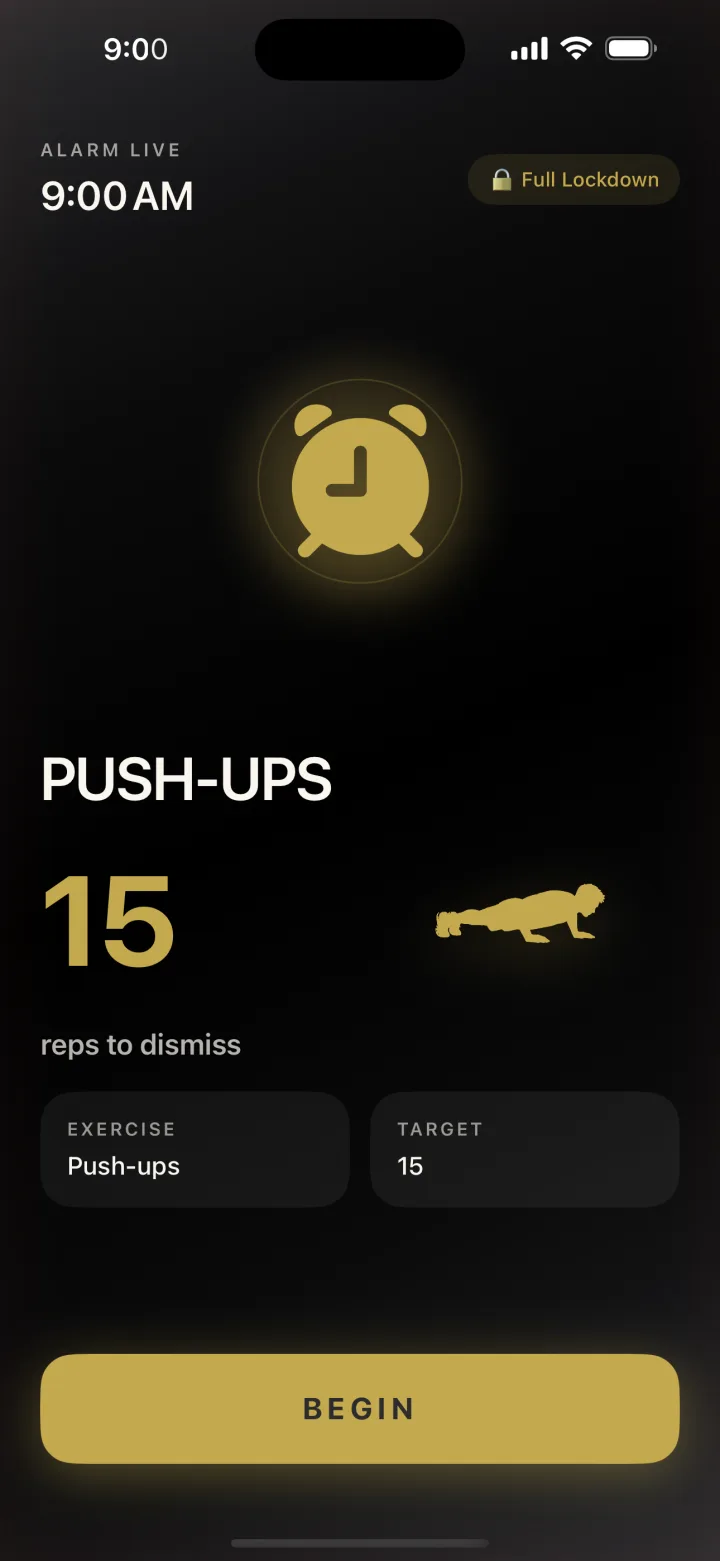
RiseReps is an iPhone alarm that only goes quiet when the camera counts your push-ups, squats or jumping jacks. No snooze, no tap-to-dismiss, and built-in progression can raise your reps each week. Counting happens on your device, nothing uploaded.
How to build up to 100 push ups a day
If you can't do 100 in a day yet, don't fake it with 100 sloppy half-reps. Build to it. Start by testing your max: one set, good form, chest close to the floor, stop when your form breaks.
Then follow the row that matches your starting point. Each week, the daily total goes up while the sets stay manageable. Retest your max at the end of week 4.
| Week | Max under 10 | Max 10–20 | Max 20–30 |
|---|---|---|---|
| 1 | 30 a day (incline or knee push-ups, sets of 5–6) | 40 a day (sets of 8) | 60 a day (sets of 12) |
| 2 | 40 a day (incline/knee, sets of 8) | 55 a day (sets of 8–10) | 75 a day (sets of 15) |
| 3 | 50 a day (mix in a few full push-ups) | 70 a day (sets of 10) | 90 a day (sets of 15) |
| 4 | 60 a day, then retest | 85 a day, then retest | 100 a day (sets of 15–20) |
These numbers are a practical starting template, not a researched protocol. If a week feels rough, repeat it. If it feels easy, skip ahead. A bad day means fewer reps, not zero reps.
100 knee push ups a day (and incline push-ups)
Knee and incline push-ups aren't cheating. Kikuchi and Nakazato's study used kneeling and other adjusted positions to match the load of a 40% bench press, and those push-ups still built muscle and strength. Push-ups with your hands on a kitchen counter or a sturdy table are easier still; the higher your hands, the easier the rep. Start where you can do clean reps, then lower your hands over the weeks.
Form in 30 seconds
- Hands slightly wider than your shoulders, wrists under your shoulders.
- Squeeze your glutes and brace your stomach so you move as one straight plank.
- Elbows at roughly 45 degrees from your body, not flared out like a T.
- Lower until your chest is a fist's height from the floor, then press all the way up.
Making 100 push ups a day stick
Most 100-a-day challenges don't fail on technique. They fail on a Tuesday at 10pm when you realise you've done 30 and you're already in bed. The fix is boring: do the first set at the same moment every day, ideally first thing in the morning, before your phone gets a vote.
That's the idea behind RiseReps. It's an alarm clock for iPhone that won't stop ringing until you do a set of push-ups, squats or jumping jacks. The camera counts each rep with on-device pose detection, so nothing is recorded or uploaded, and there's no snooze button or tap-to-dismiss. Persistent mode re-fires the alarm every 60 seconds if you bail, and optional Full Lockdown blocks your other apps until the workout is done. Your first set is done before you're fully awake.
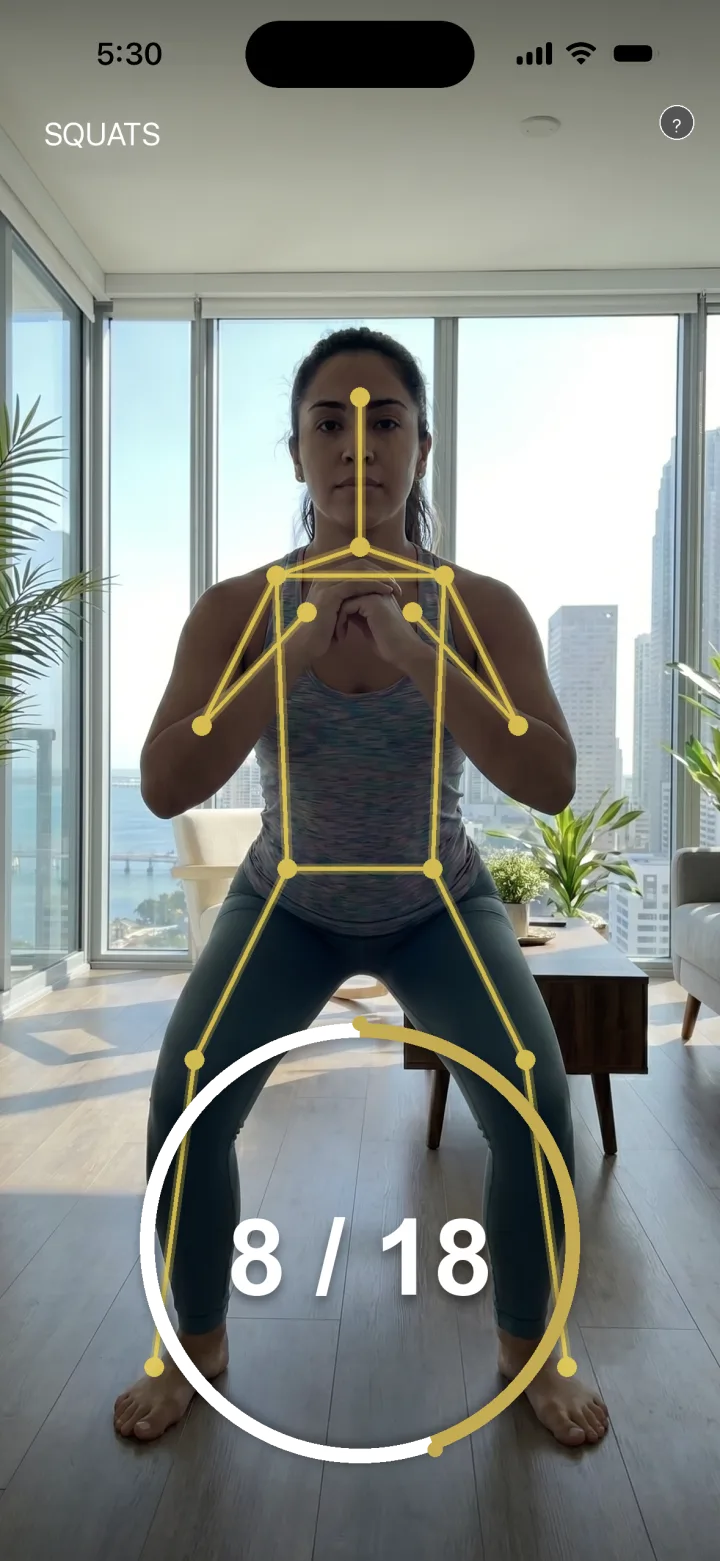
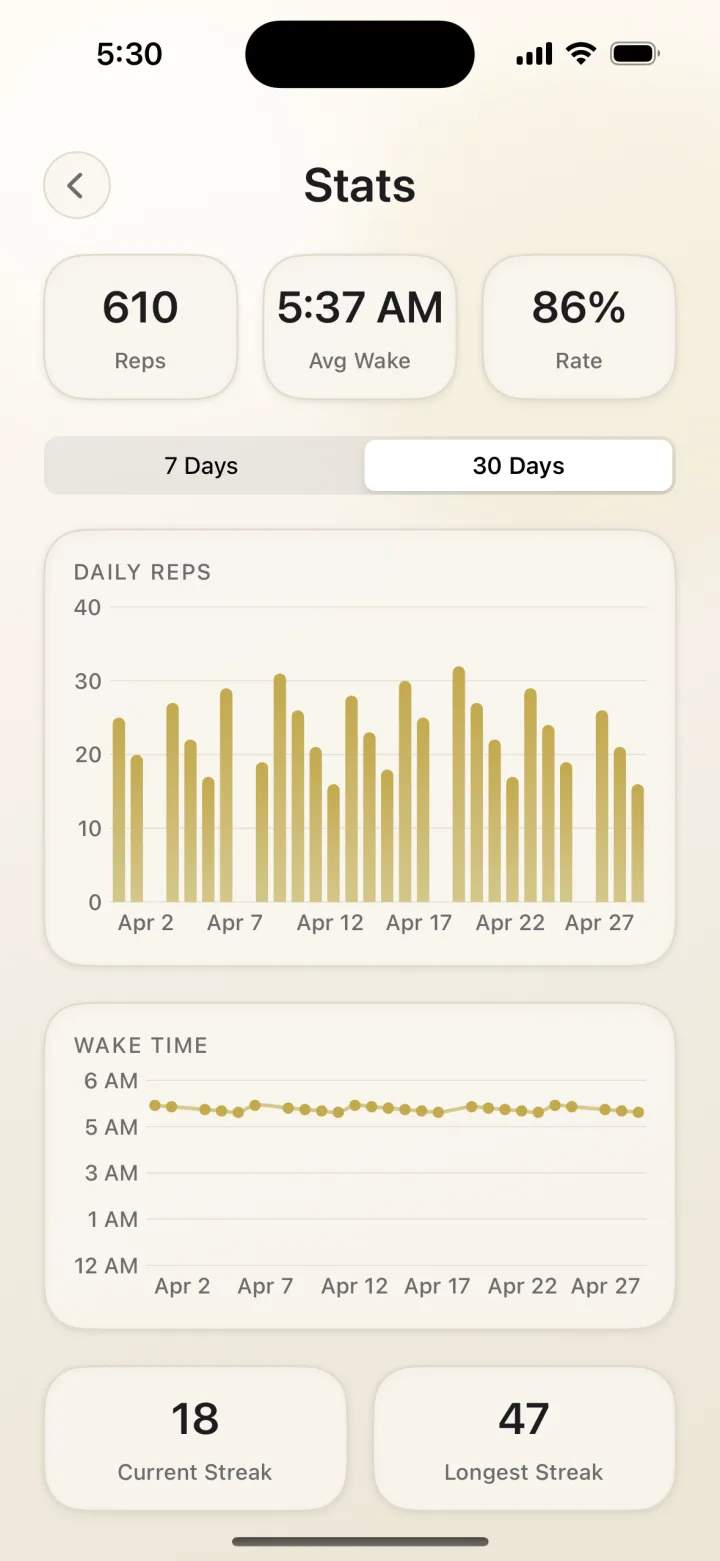
You pick the exercise and the rep count, and built-in progression can automatically raise your reps each week, which matches the build-up plan above. Your daily reps, wake times, completion rate and streak log themselves, so you can see whether the habit is actually holding instead of guessing. RiseReps is free to download on the App Store, and the alarm workouts need RiseReps Pro, a single annual subscription.
A daily push-up habit pairs naturally with a fixed wake time. If mornings are the hard part, our guides on how to wake up at 5am and how to stop hitting snooze cover the getting-up side.
After 100: what to do when it gets easy
Once 100 push ups a day takes you two or three relaxed sets, adding more reps gives you less and less. Kotarsky's study kept people improving by making the push-ups harder, not longer. Pick one of these and keep the daily total around 100:
- Slow the lowering. Take three seconds down on every rep. Same number, much harder.
- Raise your feet on a step or chair (decline push-ups) to shift more of your bodyweight onto your arms.
- Pause at the bottom for a second, chest just off the floor.
- Add load with a weighted vest or a backpack with books in it.
- Narrow your hands (diamond push-ups) for more triceps work.
And balance it out. A body that only pushes ends up with rounded shoulders. Add some rows or pull-ups for your back and squats for your legs on a few days a week. If you want your morning set to cover that, our post on the alarm that makes you do push-ups explains how rotating push-ups, squats and jumping jacks works in practice.
FAQ
Is 100 push ups a day enough to build muscle?
It can build some muscle, especially if you're new to strength training, but only if your sets are hard. Studies show light loads like push-ups build muscle when sets are taken close to failure. Ten easy sets of ten spread across the day mostly build endurance and skill, so once 100 feels easy, make the push-ups harder instead of adding reps.
How long until I see results from 100 push ups a day?
Most people notice they can do more push-ups per set within the first two to four weeks, because strength improves quickly at first. Visible changes in muscle size take longer and depend on your diet, your starting point and how hard your sets are.
Can I do 100 push ups every day?
Many healthy adults can, as long as the reps are clean and spread into manageable sets. Take an easier day or a rest day if your wrists, elbows or shoulders ache, and see a doctor or physiotherapist if joint pain lasts more than a week or two. Training every other day with harder sets works just as well for muscle growth.
Will 100 push ups a day help lose weight?
Not much by itself. A hundred push-ups take only a few minutes and don't burn a large number of calories. They help you keep and build muscle while you lose weight, but the weight loss itself mostly comes from your diet and overall activity.
Is 100 push ups a day a lot?
It depends on your starting point. If your max is 40 or more, 100 a day is a few comfortable sets. If your max is under 15, 100 a day is a big jump, and it's better to build up over three or four weeks with incline or knee push-ups than to force it with bad form.
Sources
- Calatayud J., Borreani S., Colado J. C., Martin F., Tella V., Andersen L. L. (2015). Bench press and push-up at comparable levels of muscle activity results in similar strength gains. Journal of Strength and Conditioning Research, 29. Abstract.
- Kikuchi N., Nakazato K. (2017). Low-load bench press and push-up induce similar muscle hypertrophy and strength gain. Journal of Exercise Science & Fitness, 15. Full text.
- Yang J., Christophi C. A., Farioli A., Baur D. M., Moffatt S., Zollinger T. W., Kales S. N. (2019). Association between push-up exercise capacity and future cardiovascular events among active adult men. JAMA Network Open, 2. Full text.
- Kotarsky C. J., Christensen B. K., Miller J. S., Hackney K. J. (2018). Effect of progressive calisthenic push-up training on muscle strength and thickness. Journal of Strength and Conditioning Research, 32. Abstract.
- Schoenfeld B. J., Grgic J., Ogborn D., Krieger J. W. (2017). Strength and hypertrophy adaptations between low- vs. high-load resistance training: a systematic review and meta-analysis. Journal of Strength and Conditioning Research, 31. Abstract.
- Schoenfeld B. J., Ogborn D., Krieger J. W. (2017). Dose-response relationship between weekly resistance training volume and increases in muscle mass: a systematic review and meta-analysis. Journal of Sports Sciences, 35. Abstract.
- Schoenfeld B. J., Ogborn D., Krieger J. W. (2016). Effects of resistance training frequency on measures of muscle hypertrophy: a systematic review and meta-analysis. Sports Medicine, 46. Abstract.
- Centers for Disease Control and Prevention. Adult Activity: An Overview. cdc.gov.